

Mesquite Wildlife Oasis Field Trips
Mesquite Wildlife Oasis offers schools a unique, free field trip experience featuring hands-on learning in a natural outdoor setting. The program operates for approximately 30 select program days between November and April. Submitting an application does not guarantee a field trip reservation. Once your application has been approved, you will receive a separate scheduling link to select an available date for the 2026–2027 season.Site Information
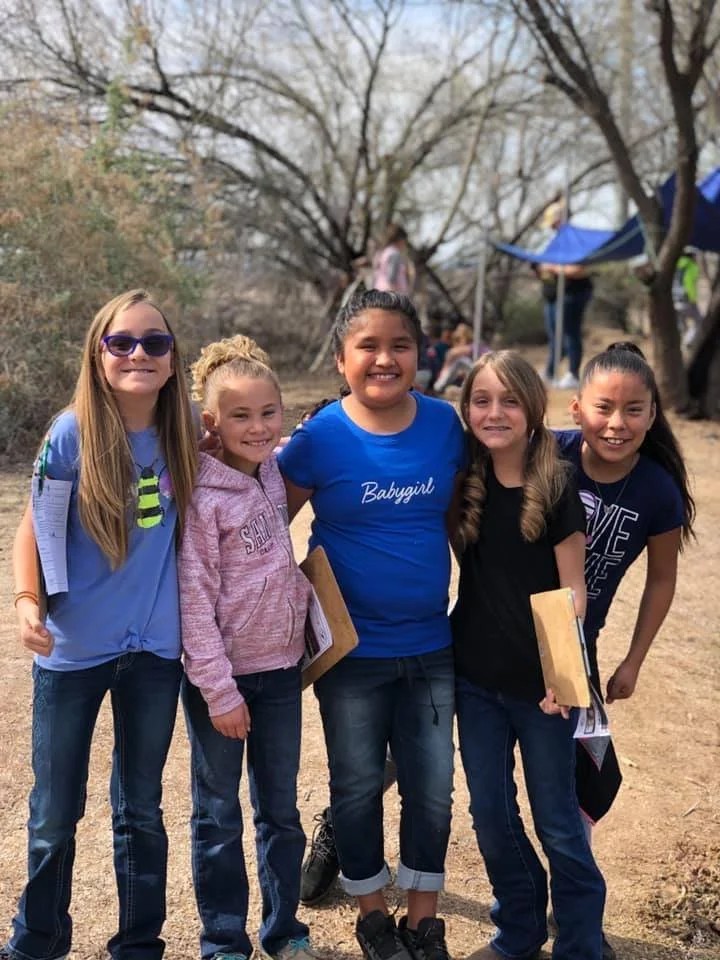
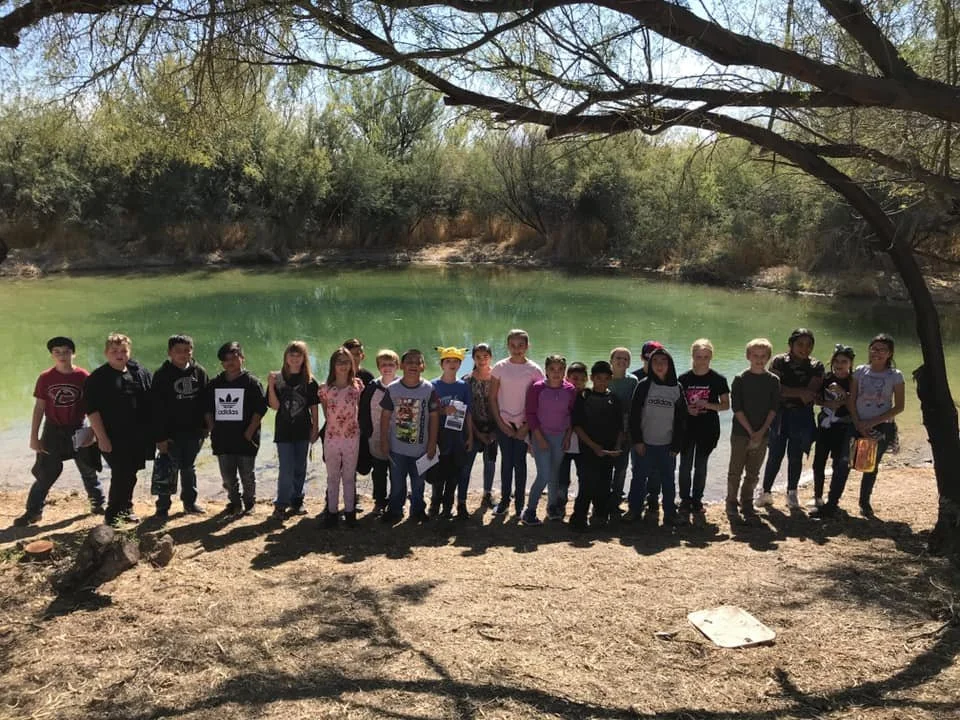
Mesquite Wildlife Oasis is a living outdoor classroom where students experience nature firsthand. Amenities are intentionally limited, allowing participants to enjoy an authentic outdoor learning environment.
The mesquite tree canopy provides our shade, the ground becomes our classroom, and portable restrooms and handwashing stations are available on-site. There is no electricity, gift shop, or other modern amenities. This is a rustic experience designed to connect students with the natural world. Come prepared to learn, explore, and experience nature in its rawest form.
Eligibility and Scheduling
Grade Levels: Second through eighth gradeGroup Size: Schools must bring a minimum of 50 students. Groups with more than 110 students will be required to schedule two separate days of programming.Homeschool Groups: This application is not intended for homeschool groups. Additional information and registration opportunities for homeschool participants will be provided separately.Scheduling: Approved schools will receive a link to select an available field trip date.
Field Trip Guidelines
Schools should arrive no earlier than 8:30 a.m. and must depart the property by 1:30 p.m.
Chaperones
We recommend at least one adult chaperone for every five students, particularly for students in grades two through four. Chaperones are expected to supervise students and actively participate in the learning experience.
Safety
All teachers, students, and chaperones must follow the Mesquite Wildlife Oasis Field Trip Rules. Students must remain with their assigned groups throughout the day.All hikes, lessons, and activities will be led or supervised by Mesquite Wildlife Oasis staff, teachers, and designated chaperones.
Leave No Trace
Mesquite Wildlife Oasis follows Leave No Trace principles. All participants are expected to respect the property, wildlife, and natural resources and to dispose of trash in the provided receptacles.
School Responsibilities
Participating schools are responsible for providing:Transportation for all students and chaperones.Student lunches and beveragesRequired permission slipsAdequate teachers and chaperones
Weather Policy
Programs will generally proceed during light to moderate rain, provided there is no lightning or other hazardous weather. Schools should review the forecast the day before their scheduled field trip and ensure participants are dressed appropriately. Programs will be canceled in the event of heavy rain, lightning, thunderstorms, or other unsafe conditions. Schools choosing to cancel because of weather concerns should contact Becky Bouquot at 602-501-4788. Weather-related cancellations may be rescheduled based on program availability.
Appropriate Outdoor Clothing
Participants should wear clothing appropriate for outdoor activities and changing weather conditions. Closed-toe shoes are required. During the winter months, long pants and layered clothing are strongly encouraged. Programs and activities cannot be modified to accommodate participants who are not dressed appropriately. Students whose clothing or footwear presents a safety concern may be required to sit out of certain activities.Cancellation Policy
Schools that need to cancel a scheduled field trip should provide notice as soon as possible by emailing outdoor.workshops@gmail.com or calling 602-501-4788. Timely notice allows us to offer the date to another school on the waiting list. Weather-related cancellations may be rescheduled based on availability. Field trips canceled for other reasons may not be eligible for rescheduling.
Courses Offered at Mesquite Wildlife Oasis
-
Students build essential outdoor survival skills, including shelter construction, basic first aid, and signaling techniques. Through engaging group activities, this lesson strengthens teamwork, problem-solving, and critical-thinking skills.
-
Students learn to identify mammals by examining their defining characteristics. Using real mammal skulls and hides, they explore physical adaptations and discover how skeletal features, teeth, and other traits can help identify wildlife.
-
Our signature lesson! Students explore the Oasis alongside a naturalist while searching for signs of wildlife. They learn techniques for observing animals - even when they remain hidden - and may discover tracks, scat, owl pellets, nests, and other evidence of life. This flexible lesson can be adapted for all grade levels.
-
Students search for and identify aquatic insects and other organisms living in the Oasis ponds. By examining the species they collect, students learn how aquatic life can be used as an indicator of water quality. They also collect, analyze, and interpret data to better understand the water-monitoring process. This lesson is especially effective during warmer months.
-
In this hands-on activity, students dissect owl pellets, identify prey remains, and reconstruct small animal skeletons. They also create a simple food chain and identify the trophic levels of the organisms within it.
-
Through observation and comparison, students identify three major types of rocks and explore how each is formed. They also use a scratch test to determine the hardness of an unknown mineral based on its physical properties. Depending on class size, geodes may be available for additional hands-on exploration.
-
Students examine the adaptations that help predators capture prey and help prey avoid predators. They explore the importance of these adaptations and discuss how predator-prey relationships influence wildlife populations and ecosystem balance. This lesson is part of the Project WILD curriculum.
-
Students use dice rolls and role-playing to simulate the movement of water through the environment. By acting as water molecules, they experience the water cycle as a dynamic, interconnected process rather than a simple, linear path. Students also create water-cycle bracelets to represent and reinforce what they have learned. This lesson is a Project WET activity.
-
Students draw inspiration from the natural world to create landscape paintings that reflect the beauty of their surroundings. The lesson combines creativity with scientific observation, encouraging students to closely examine the colors, textures, shapes, and patterns found in the desert environment.
-
10909 S 399th Ave, Tonopah, AZ 85354
Take I-10 to Exit 98, Wintersburg Road
Head South on Wintersburg Road until it ends
Turn Right on Elliot Road and then left into the RWE Solar Site
Look for the Mesquite Wildlife Oasis sign
Please park in the open gravel parking lot and wait until Educators have arrived to greet your school.
-
Mesquite Wildlife Oasis is closed to the public. Visitors must schedule a guided tour to obtain access to the site.
-
Mesquite Wildlife Oasis: outdoor.workshops@gmail.com
General Information: info@wildlifefortomorrow.org
Phone/Text: 602-501-4788